
What Does Perseverance Mean for Kids? A Parent's Guide to Helping Children Learn Through Mistakes
- Dizzy Carr
- Jul 10
- 4 min read


Discover what perseverance for kids really means and how The Minotaur's Maze helps children build resilience, confidence and the courage to keep trying.
Every child reaches a moment when they want to give up.
It might be after falling off a bike.
Missing a goal in football.
Getting a spelling word wrong.
Or struggling to finish a puzzle.
Their shoulders drop.
Their confidence disappears.
Then come the four words every parent has heard...
"I can't do it."
As adults, we understand that mistakes are part of learning. But children often see mistakes as proof they've failed.
That's why perseverance for kids is such an important life skill. When children learn that mistakes help them grow, they become more confident, more resilient and more willing to try again. It's one of the reasons I wrote The Minotaur's Maze, the newest adventure in the Griffin & Mythical Friends series. Rather than teaching children to avoid mistakes, it encourages them to see every challenge as another opportunity to learn.
What Is Perseverance for Kids?
Simply put, perseverance for kids means continuing to try even when something feels difficult.
It doesn't mean children should never feel frustrated.

It doesn't mean they'll always succeed on the first attempt.
Instead, perseverance means believing that every effort matters.
It's the courage to keep reading even when the words feel tricky.
The determination to rebuild the tower after it falls down.
The confidence to have another go after making a mistake.
Children who develop perseverance don't stop making mistakes.
They simply stop being afraid of them.
Why Perseverance for Kids Matters More Than Perfection
Many children grow up believing they need to get everything right.
Perfect handwriting.
Perfect scores.
Perfect artwork.
But perfection isn't what helps children succeed in life.
Perseverance does.
Children who learn to persevere become better problem solvers because they understand that every setback teaches them something new.
Instead of asking...
"Why did I fail?"
They begin asking...
"What can I learn from this?"
That simple change in thinking builds confidence that lasts far beyond childhood.
How Mistakes Help Build Perseverance for Kids
Mistakes aren't something to avoid.
They're one of the greatest teachers children will ever have.

Think about learning to ride a bike.
Very few children climb on and cycle perfectly the first time.
They wobble.
They fall.
They get back up.
Every mistake teaches balance.
Every attempt builds confidence.
Life works exactly the same way.
Whether children are learning maths, swimming, making friends or trying something creative, mistakes are helping their brains grow.
That's why praising effort instead of perfection can make such a difference.
Instead of saying,
"You're so clever."
Try saying,
"I'm proud that you kept trying."
Those small changes encourage children to value perseverance rather than perfection.
How The Minotaur's Maze Teaches Perseverance for Kids
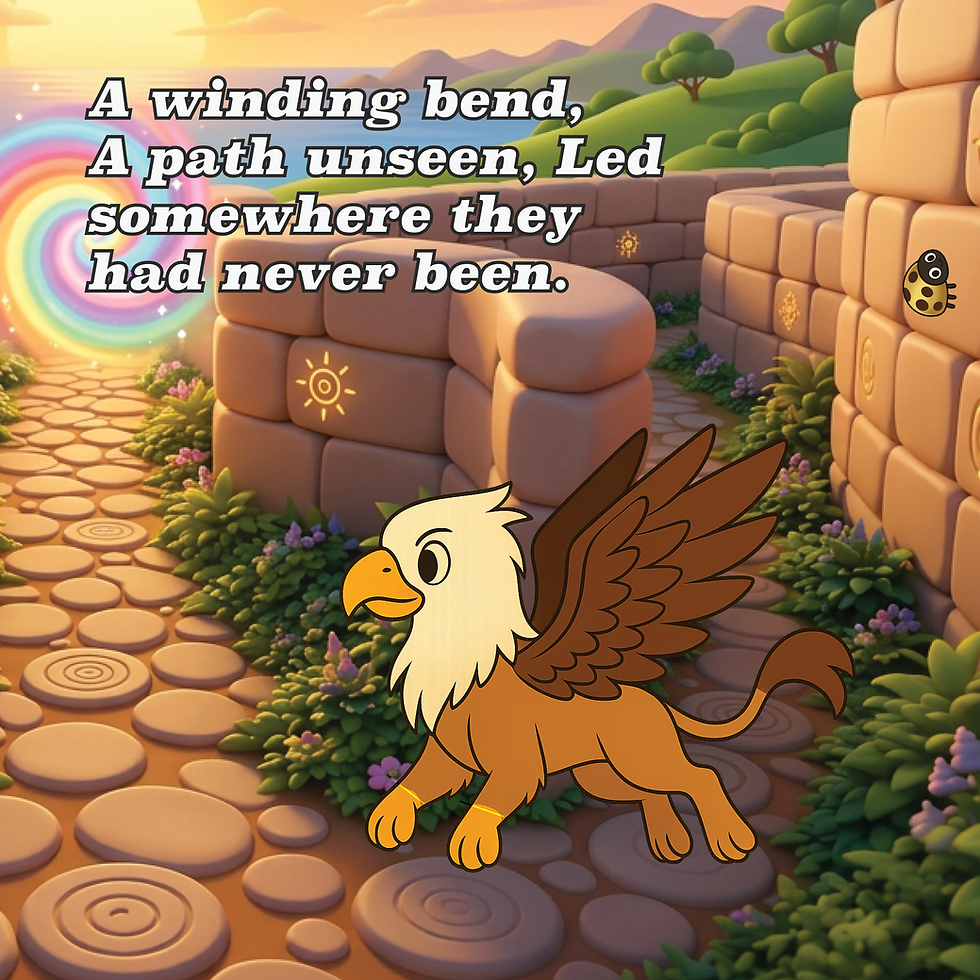
In The Minotaur's Maze, Griffin and Jbug discover a huge stone maze filled with twisting paths and unexpected dead ends.
Every route seems promising.
Until another wall appears.
The more Griffin searches for the correct path, the more frustrated they become, eventually wondering whether they'll ever reach the centre.
Deep inside the maze, they meet Talos, a gentle Minotaur with one chipped horn.
Rather than hiding his broken horn, Talos wears it proudly because every crack reminds him of a lesson he learned along the way.
He helps Griffin realise that wrong turns aren't failures.
They're part of the journey.
It's a simple message, but one that children can carry with them long after the final page.
Helping Children Develop Perseverance Every Day
Teaching perseverance doesn't require complicated lessons.
It happens during everyday moments.
When your child struggles with homework.
When they lose a game.
When they find something difficult.
Rather than solving the problem for them, encourage them to keep going.
Celebrate effort.
Praise determination.
Remind them that every expert was once a beginner.
Children who believe mistakes are part of learning become adults who aren't afraid to chase big dreams.
Learning Through Adventure
Like every book in the Griffin & Mythical Friends series, The Minotaur's Maze combines storytelling with interactive fun.
Children can:
Search for all 5 hidden Mazlings.
Find Jbug on every page.
Solve a hidden secret message as they explore the maze.
These activities encourage observation, patience and perseverance, making children active participants in the adventure while reinforcing the story's message.
Final Thoughts
If there's one lesson I hope children take away from The Minotaur's Maze, it's this:
Making mistakes doesn't mean you've failed.
It means you're learning.
Every wrong turn teaches something new.
Every challenge helps us grow.
And every time we choose to try again, we become a little stronger than we were before.
Because perseverance isn't about always getting it right.
It's about never giving up on yourself.



Comments