
Why Boredom Might Be the Best Thing for Your Child's Imagination
- Dizzy Carr
- Jun 19
- 4 min read

Few phrases make parents react faster than hearing, "I'm bored." It’s almost like a signal to jump into action. We rush to find a toy, a screen, or an activity to fill the silence. But what if boredom isn’t a problem at all? What if it’s actually the start of something wonderful?
Boredom often gets a bad reputation. We think it means a child is unhappy or restless. Yet, when children face boredom, their minds begin to wander and explore. This quiet moment can spark creativity and imagination in ways that constant entertainment never can.
Children don't need endless entertainment. Given a little time and space, an ordinary woodland path can become the start of an unforgettable adventure.
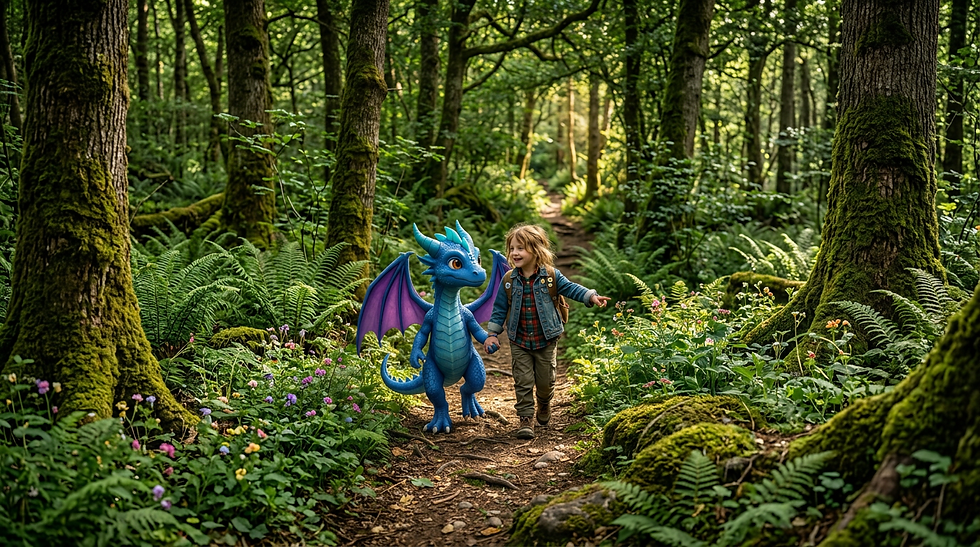
Boredom can lead to magical adventures, like going for a walk
The Hidden Power of Boredom
When children are always entertained, they rarely need to create their own fun. But when boredom appears, something interesting happens. Their brains start searching for ways to fill the quiet. They begin asking questions, inventing games, building dens, and creating stories.
What looks like "nothing" is often the start of imagination at work.
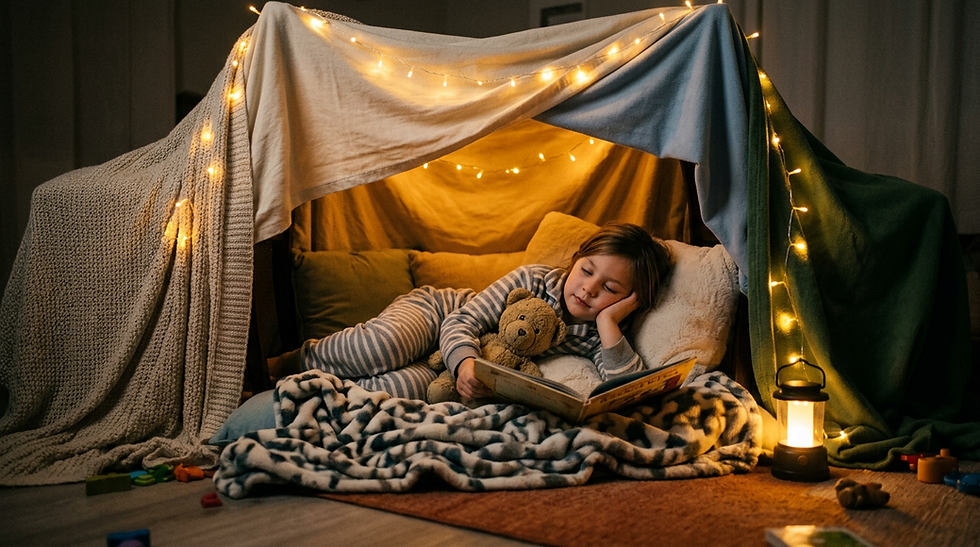
For example, a child might take a simple stick and imagine it as a wizard’s staff. A blanket can become a secret cave. These moments of boredom push children to use what’s around them to invent new worlds.
This is why I believe boredom is not a problem to fix but a gift to cherish.
Every Adventure Starts Somewhere
Many of the games children remember most weren’t bought in a shop. They were invented. A cardboard box becomes a castle. A blanket becomes a cave. A stick becomes a wizard’s staff. A garden becomes a magical kingdom.
These adventures rarely begin with excitement. They begin with a child standing in a room saying, "I'm bored."
This simple sentence is the spark that lights the fire of creativity. It’s the moment when a child decides to turn the ordinary into the extraordinary.
One way to encourage this is by providing open-ended toys that don’t tell children exactly how to play. For instance, the Griffin and mythical friend's Book Series offers stories that inspire children to imagine their own adventures. These books don’t just tell a story; they invite children to create their own.
Learning to Entertain Themselves
One of the greatest gifts boredom gives children is independence. Instead of relying on adults to provide every activity, they learn how to create their own.
This builds confidence. It develops problem-solving skills. And it teaches children that they are capable of turning ordinary moments into something special.
For example, when a child is bored, they might decide to build a den using cushions and chairs. This simple act requires planning, creativity, and a bit of trial and error. It’s a small challenge that helps them grow.
Sometimes, parents can gently encourage this by stepping back and letting children find their own way. It’s okay to resist the urge to fill every quiet moment.
A Little Boredom Is Okay
Of course, children still need love, attention, and shared experiences. But not every quiet moment needs to be filled.
Sometimes the best thing we can do is give children a little space to wonder, imagine, create, and explore.
Because big things often begin quietly. And some of the greatest adventures start with a simple sentence: "I'm bored."
At Dizzy Carr Books, we believe imagination grows in the small moments. The moments that seem ordinary today often become the memories children treasure tomorrow.
Books like those from Dizzy Carr invite children to dream and imagine beyond the page.
How to Support Imaginative Boredom
Here are some gentle ways to support your child’s boredom without rushing to fix it:
Offer simple materials like paper, crayons, or building blocks. These allow children to create without limits.
Encourage outdoor play where nature becomes the playground. A garden can be a magical kingdom.
Read stories that inspire imagination, such as the Griffin and mythical friend's Book Series These stories spark ideas and encourage children to dream.
Resist the urge to entertain constantly. Sometimes, sitting quietly with your child and watching them think is the best support.
By doing this, you help children learn that boredom is not empty time but a chance to explore their own minds.
The Role of Imaginative Books and Child's imagination
Books can be a wonderful bridge between boredom and creativity. The Griffin and mythical friend's Book Series is designed to spark imagination and instil values like courage and kindness.
These books don’t just tell a story; they invite children to imagine themselves as part of the adventure. This kind of reading encourages children to think beyond the page and create their own stories.
When children read about magical kingdoms and brave heroes, they often want to act out these stories or invent new ones. This is the magic of combining boredom with inspiring books.

Simple toys like wooden blocks encourage children to build and imagine their own worlds.
Why It Matters
In a world full of screens and constant entertainment, boredom can feel uncomfortable. But it’s important to remember that boredom is a natural and valuable part of childhood.
It teaches children to be patient, to think deeply, and to find joy in their own company. It helps them develop skills that will serve them for life.
By allowing children to experience boredom, we give them the chance to become creators, problem solvers, and dreamers.
If you want to encourage your child’s imagination, consider introducing books like the Griffin and mythical friend's Book Series These stories are gentle invitations to dream big and be kind, helping children turn boredom into adventure.
Remember, sometimes the best adventures start with just three words: "I'm bored."
Let your child’s imagination take flight. Give them the space to wonder, create, and explore. The magic is waiting. Discover More Topics
Explore more calm parenting ideas, emotional reflections, sibling connection posts, bedtime routine articles, imaginative play ideas, and gentle family-focused stories.


Comments